Admiral v00043: Hardware Endurance, Storage Optimizations, and High-Fidelity Edge Telemetry
Introducing ZRAM migration, native FS scrubs, rapid DHCP onboarding, and robust physical edge instrumentation.

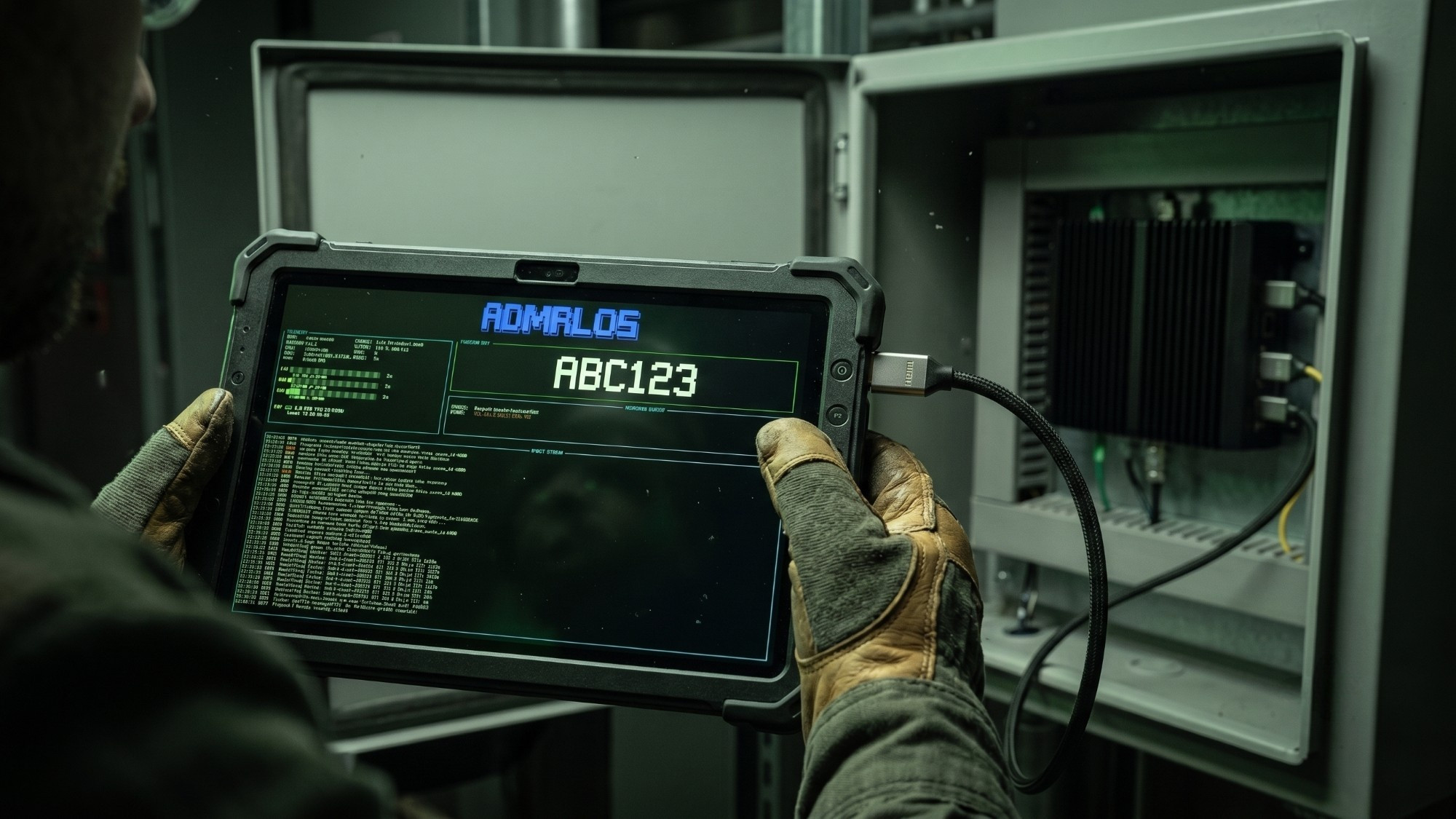
Keeping edge fleets operational under physical stress requires a relentless focus on hardware longevity, dependable network recovery, and crystal-clear telemetry. Hot on the heels of our unified ARM64 architecture deployment, Admiral v00043 focuses on reducing thermal and write-wear degradation, refining local network state logic, and maximizing diagnostic accuracy when field engineers are operating on local command-line or physical interfaces.
Here is a deep look at what is changing under the hood.
1. Storage & Memory Endurance Infrastructure
Flash memory (especially consumer-grade eMMC and lower-tier SSDs) fails spectacularly when subjected to sustained log writes, kernel swap cycles, and structural filesystem drift. Version v00043 implements three key structural defenses to maximize physical host lifetimes:
- Next-Gen In-Memory Optimization: We have migrated our virtual memory swap architecture directly into compressed volatile heap space. By executing swap processes strictly inside system memory, we eliminate redundant writes to thin flash interfaces. This shift drastically benefits non-ECC RAM setups, reducing I/O bottlenecks and preserving the lifetime of system disks.
- Dynamic Filesystem Integrity Inspections: To keep storage pools healthy without introducing high-maintenance overhead, Admiral now automatically manages automated disk verification schedules and tunes wear parameters optimized to reduce disk rebalancing overhead on low-end storage media.
- Tightened Workload Storage Restraints: To prevent workloads from leaking shared system resources or modifying localized storage layers, workloads are now blocked from mounting or creating custom loop storage nodes.
2. Dynamic Network State & Infrastructure Diagnostics
Network states must report accurately despite physical line disruptions or ambient RF interference. We have hardened connection metrics and unified hardware profiling:
- Carrier vs. Operstate Alignment: We updated our link-monitoring logic to correctly differentiate electrical/wireless carrier signals (
carrier) from actual logical IP readiness (operstate) during Wi-Fi and ethernet onboarding transitions. This prevents premature connection routing while interfaces are still acquiring security handshakes. - WiFi Authentication Recovery: Resolved persistent loop issues on Wi-Fi state machines to ensure prompt, graceful recovery and detailed failure event logging when hitting local WPA/PSK key authentication issues.
- Precise Networks Specs: Fixed an edge-case bug reporting incorrect IP definitions on secondary Wi-Fi interfaces.
3. High-Fidelity Infrastructure Specs & Onboarding Telemetry
We are tightening our cloud API to provide absolute clarity regarding what is happening on physical hardware:
- No More “Unknown” Spec Signals: Node-to-cloud synchronization payload routines have been heavily filtered. The agent no longer relays blank or “unknown” hardware specification keys to the cloud console, vastly reducing metadata noise in the fleet management database.
- Dynamic Screenshot Compositing: When administrators request terminal visual diagnostics of node screens, the system now validates if active displays are physically attached. In multi-monitor configurations, the system appends independent framebuffers together into a single, unified landscape screenshot canvas.
- Expanded Hardware Specs reporting:
- Active screen resolutions and firmware version keys are now mapped directly to the inventory metadata spec sheets.
- System profiling now interrogates the BIOS/SMBIOS arrays to surface precise physical RAM frequency/speed (e.g., DDR4 3200 MT/s) directly on the host specification list.
| Parameter | Type | Description |
|---|---|---|
screen_resolution | Str | Active viewport canvas width x height (multi-display appended) |
ram_speed_mts | Int | Real physical memory clock reported in MT/s |
4. Boot, Provisioning, & Workload Speed Improvements
Onboarding speeds determine how quickly massive deployments can be finalized on-site. v00043 includes radical speedups and strict data durability safeguards:
- Atomic Configuration Syncs: To protect against unexpected power losses during local provisioning stages, all state, pairing, and workload configuration changes are now atomically committed and immediately flushed (
fsync) down to physical disk blocks. - Netlink Events & DHCP Optimization: We heavily optimized our local
netlinkevent listeners and streamlined local DHCP client handshakes. These changes dramatically accelerate initial onboarding calls, reducing overall registration handstands. - Pre-Staged Binary Downloading: The low-level boot initializer now strictly enforces filename-based version checks for internal sub-component binaries during downloads to prevent untagged or out-of-order target binaries from being stored over active system tools.
- GPIO Hard-Reset & Block Diagnostic Fixes: Patched an issue with physical GPIO pin hard-resets, where target hardware identification sequences (such as block UUID reads and active partition maps) could fail under specific controller timings or slow-initializing host environments.
- Deterministic Automated Device Naming: We have officially moved away from volatile random names during early staging. Unprovisioned bare-metal devices are now dynamically assigned highly-legible identities structured by their profile, birth date, and slice-UUID:
[profile_tag]-[device_dob]-[uuid](e.g.,kiosk-20260528-a4f91b). - Workload State and Upstream Modules:
- Added active state and deployment configuration status returns directly inside high-priority system telemetry channels.
- Added support for loading late auxiliary kernel modules inside the early supervisor/init phases of the companion initialization micro-binary.
5. TUI UX Polish & System Telemetry Fixes
Our localized Terminal User Interface (TUI) acts as the primary tool for on-site engineers. This update targets classic quality-of-life snags:
- No More Stuck At 99%: Diagnosed and squashed a TUI progress rendering bug where high-volume package downloads would complete successfully but remain permanently stalled visually at a “99%” completion status indicator.
- Dynamic UUID & Disk Space Percentages: Local physical monitors running the TUI now visibly render the device’s main registration UUID and a clean percentage representation of active disk group capacity directly on the home screen layout.
- Log Verbosity Control: Adjusted and tuned our core messaging broker telemetry logs to avoid spamming system registers during standard health checks.
- Time Drift Log Correction: We patched a system logger timing drift that could cause early boot records to export with pre-timestamped chronological errors relative to localized RTC clocks.
Daniel Ward
Co-founder & CTO
Daniel runs engineering at Admiral and has a rich background in highly distributed linux systems across infrastructure and finance.